
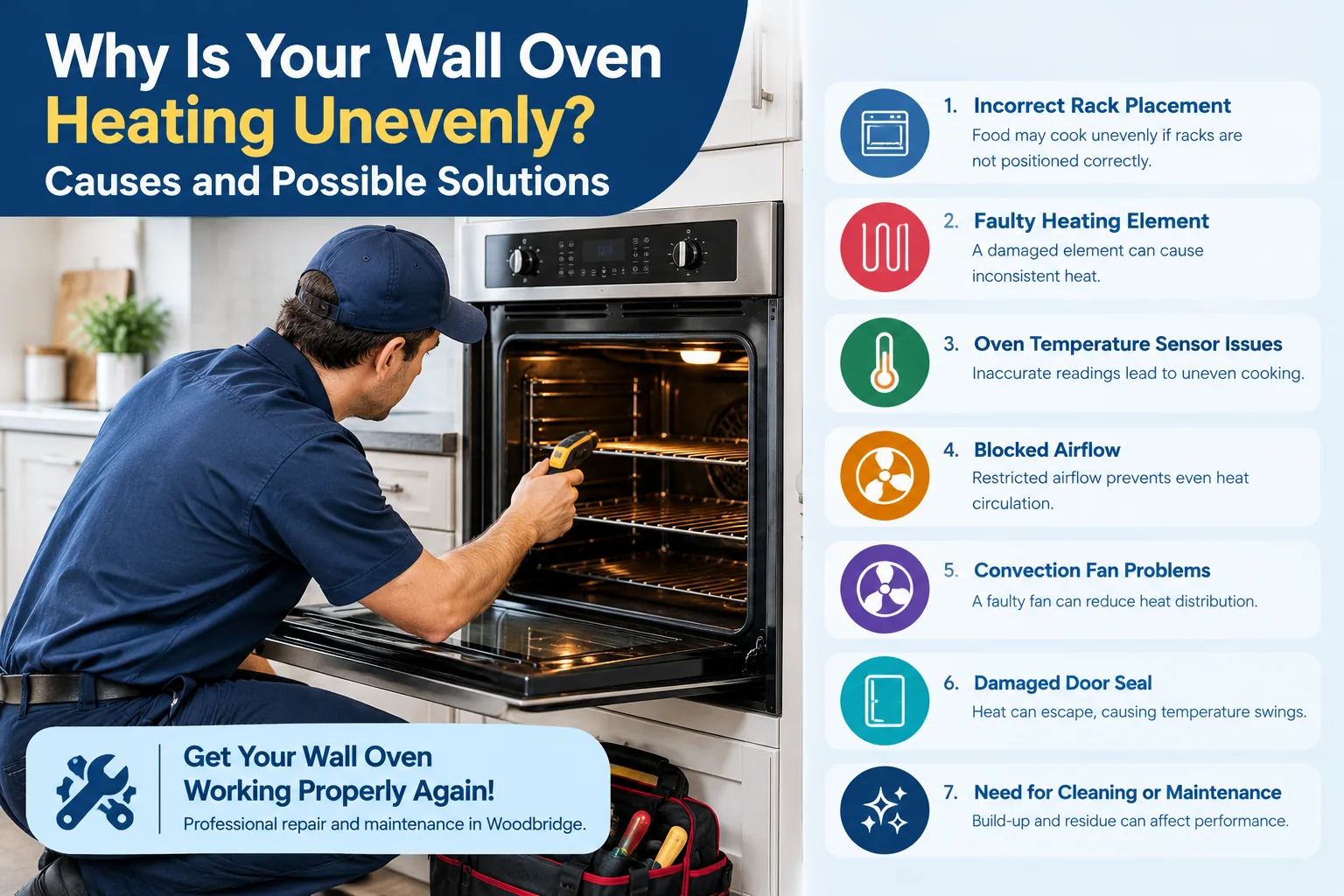
A wall oven is an important appliance in many modern kitchens, making it easier to prepare meals, bake desserts, and cook food for the entire family. However, when food cooks unevenly, one side may burn while the other remains undercooked. This can affect cooking results and make everyday meal preparation frustrating.
Uneven heating can happen for several reasons, including incorrect rack placement, blocked airflow, faulty heating elements, or temperature control problems. Understanding these causes can help homeowners identify simple issues and determine when professional assistance may be necessary.
For homeowners searching for wall oven repair Woodbridge, knowing the common warning signs can help them make informed decisions about oven maintenance and repair.
1. Incorrect Oven Rack Placement
One of the simplest reasons for uneven cooking is incorrect rack placement. Different recipes require different rack positions to distribute heat properly. Placing food too close to the top or bottom heating element can cause certain areas to cook faster than others.
Possible solutions:
- Follow the rack position recommended in your recipe.
- Use the center rack for many baking tasks unless the recipe specifies otherwise.
- Leave enough space around cookware for heat to circulate.
- Avoid placing large baking trays too close to the oven walls.
Adjusting the rack position may solve the problem without requiring any repairs.
2. A Faulty Heating Element
Electric wall ovens typically use heating elements to generate the heat needed for cooking. If an element becomes damaged or stops working correctly, the oven may struggle to maintain an even temperature.
You might notice that food browns unevenly, baking takes longer than usual, or the oven does not seem to reach the expected temperature.
What to check:
- Look for visible damage or blistering on an element when the oven is switched off and completely cool.
- Notice whether the oven consistently struggles to cook food evenly.
- Check whether a particular cooking mode performs differently from another.
Do not touch heating elements or attempt electrical testing while the oven is connected to power. A qualified technician can determine whether an element needs replacement or another component is responsible.
3. Problems With the Oven Temperature Sensor
The temperature sensor helps the oven monitor its internal heat. If it provides inaccurate readings, the oven may heat too much, too little, or cycle incorrectly.
This can result in cookies browning too quickly, cakes remaining undercooked, or cooking times becoming inconsistent.
Possible solutions:
- Review the owner’s manual for temperature calibration instructions.
- Compare cooking results across multiple uses to identify a recurring pattern.
- Contact an appliance technician if the temperature appears significantly inconsistent.
Some ovens allow temperature calibration through their control panels. However, calibration will not correct a damaged sensor or another underlying mechanical problem.
4. Blocked Airflow Inside the Oven
Proper air circulation helps distribute heat throughout the oven cavity. When cookware blocks vents or several large pans are packed too closely together, heat may not circulate as intended.
This is particularly noticeable when baking multiple trays at once.
How to improve airflow:
- Avoid covering oven vents.
- Leave space between baking pans.
- Use cookware that fits comfortably inside the oven.
- Follow the manufacturer’s recommendations for convection cooking.
If the oven has a convection setting, check whether its fan operates normally. A damaged fan or blocked fan area may require professional inspection.
5. A Malfunctioning Convection Fan
Many modern wall ovens use a convection fan to circulate hot air. This helps food cook more evenly and can reduce cooking times for certain recipes.
If the fan stops working, runs inconsistently, or becomes obstructed, some areas of the oven may receive more heat than others.
Possible warning signs include unusual fan noises, inconsistent results on multiple racks, or poor performance when using convection mode.
Turn the oven off and allow it to cool before inspecting any accessible areas. Never reach into the fan assembly or remove internal panels without the proper training. A technician can inspect the motor, fan blades, and related components.
6. A Damaged Door Seal
An oven door seal helps retain heat inside the cooking compartment. If the gasket becomes worn, torn, loose, or compressed, heat may escape around the door.
This can cause longer cooking times and temperature fluctuations, especially during extended baking sessions.
What homeowners can do:
- Check the visible gasket for tears or loose sections when the oven is cool.
- Clean the seal gently according to the manufacturer’s instructions.
- Avoid pulling or stretching the gasket unnecessarily.
- Arrange a replacement if the seal is damaged.
A properly fitting door and gasket help the oven maintain a stable cooking temperature.
7. The Oven Needs Cleaning or Maintenance
Grease, food spills, and accumulated residue can affect oven performance. Although ordinary dirt does not always cause uneven heating directly, heavy buildup can contribute to odors, smoke, or problems around certain components.
Regular cleaning also makes it easier to spot damage before it becomes more serious.
Maintenance tips:
- Remove loose food debris after the oven cools.
- Clean racks and interior surfaces using approved products.
- Avoid spraying cleaner directly onto heating elements, sensors, or fans.
- Follow the manufacturer’s guidance before using a self-cleaning cycle.
If uneven heating continues after cleaning and checking the basic settings, the issue may involve an internal component rather than routine maintenance.
When Should You Call a Professional?
Simple adjustments, such as changing rack positions or improving airflow, can sometimes resolve uneven cooking. However, recurring temperature problems may indicate a faulty heating element, sensor, fan motor, wiring, or control board.
Consider contacting a qualified appliance repair technician if:
- Food continues to cook unevenly despite correct rack placement.
- The oven cannot maintain a consistent temperature.
- The oven displays an error code.
- The fan makes unusual grinding or rattling noises.
- The oven repeatedly shuts off or fails to heat properly.
- You notice burning smells, sparks, or signs of electrical damage.
If you see sparks or suspect an electrical fault, stop using the oven and disconnect power only if it is safe to do so.
Professional diagnosis can help identify the actual cause and avoid unnecessary replacement of parts that are still working properly.
How to Prevent Uneven Oven Heating
A few simple habits can help maintain consistent cooking performance and reduce avoidable problems.
- Preheat the oven according to the recipe instructions.
- Use the recommended rack position.
- Avoid overcrowding the oven cavity.
- Keep vents clear and maintain the door seal.
- Clean spills and residue regularly.
- Follow the manufacturer’s instructions for temperature calibration and maintenance.
If your oven continues to heat unevenly despite these steps, professional wall oven repair Woodbridge services may help restore reliable performance.
Final Thoughts
Uneven wall oven heating can result from something as simple as incorrect rack placement or something more complex, such as a defective heating element, temperature sensor, or convection fan. Identifying the symptoms and checking basic settings can help you understand the issue before arranging repairs.
Regular maintenance can improve cooking consistency, but persistent problems should be inspected by a qualified technician. Addressing the cause early can help protect your appliance, improve cooking results, and prevent further complications.