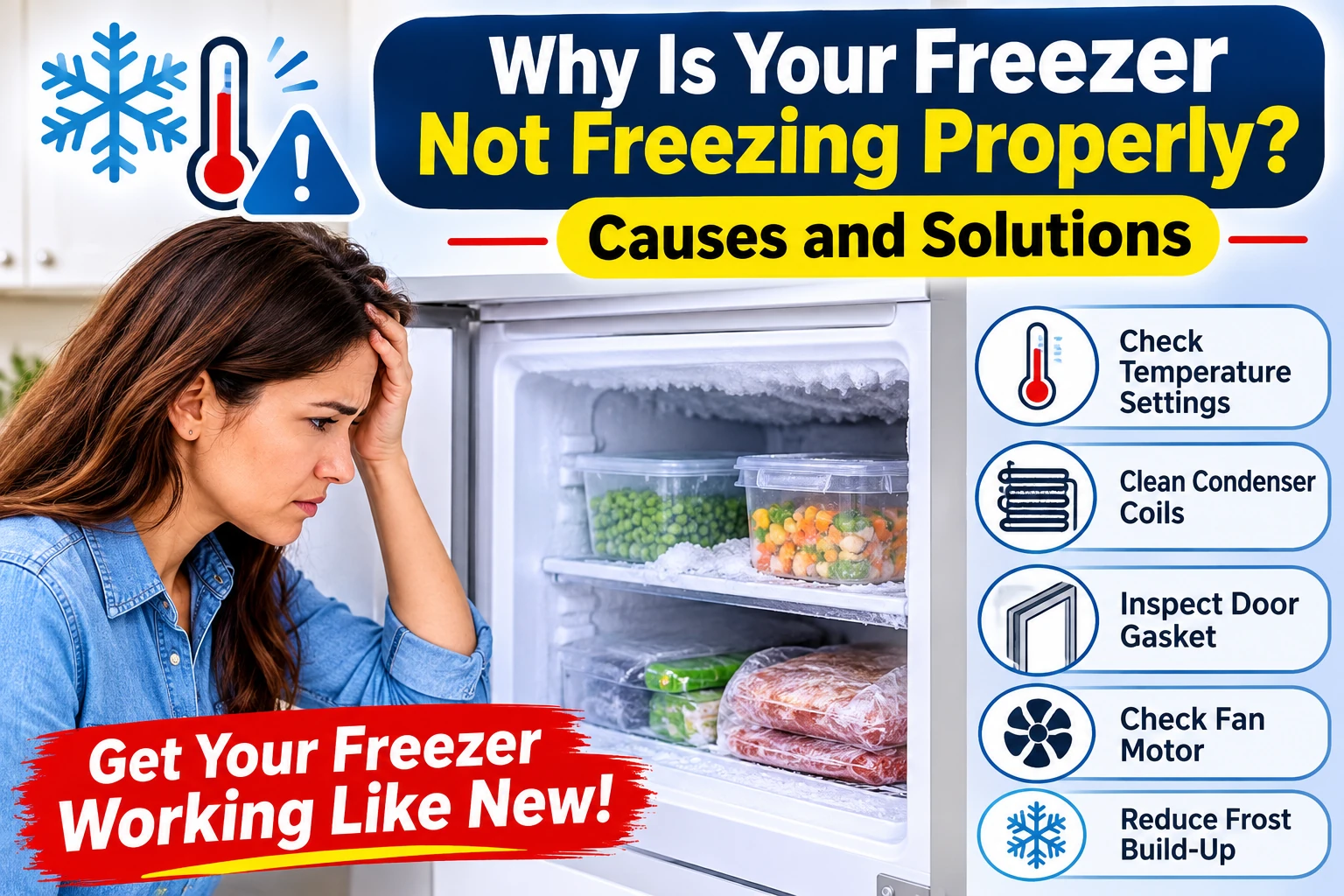
A freezer is an essential household appliance that helps preserve food, maintain freshness, and reduce food waste. Homeowners in Woodbridge, Virginia, rely on their freezers to store frozen meals, meat, vegetables, and other perishable items safely. However, when a freezer stops freezing properly, it can create inconvenience and put stored food at risk.
Sometimes, a freezer may continue running without maintaining the required temperature. You might notice soft ice cream, partially frozen food, excessive frost, or unusual noises coming from the appliance. These problems can occur because of dirty condenser coils, damaged door seals, faulty fans, incorrect temperature settings, or other mechanical issues.
Understanding the common reasons behind freezer cooling problems can help homeowners identify early warning signs and determine when professional assistance is necessary. Here are some common causes and possible solutions.
1. Incorrect Freezer Temperature Settings
One of the simplest reasons a freezer may not freeze properly is an incorrect temperature setting. If the thermostat is accidentally adjusted, the appliance may not maintain a sufficiently low temperature.
The recommended freezer temperature for food storage is approximately 0°F (-18°C).
Common signs include:
- Ice cream becoming soft.
- Frozen food starting to thaw.
- Ice cubes taking longer to freeze.
- Temperature fluctuations inside the freezer.
Possible solution: Check the temperature control and adjust it according to the manufacturer’s recommendations. Allow sufficient time for the freezer to stabilize before evaluating its performance again. Use an appliance thermometer to verify the actual temperature.
2. Dirty or Blocked Condenser Coils
Condenser coils release heat from the refrigeration system. When dust, dirt, and pet hair accumulate on these coils, the freezer may struggle to remove heat efficiently.
As a result, the cooling system has to work harder, which can reduce performance and increase electricity consumption.
Warning signs include:
- Freezer running continuously.
- Poor freezing performance.
- Unusual humming sounds.
- Increased energy bills.
Possible solution: Clean accessible condenser coils according to the manufacturer’s instructions. Before cleaning, disconnect power to the appliance when required. If cooling problems continue, arrange a professional inspection.
3. Damaged or Worn-Out Door Gasket
The door gasket creates an airtight seal that prevents warm air from entering the freezer. When this seal becomes cracked, loose, or damaged, outside air can enter the appliance and affect its internal temperature.
Moisture entering through the damaged seal may also contribute to excessive frost buildup.
Common warning signs include:
- Frost developing around the door.
- Moisture near the freezer opening.
- Door not closing tightly.
- Food becoming softer than usual.
Possible solution: Inspect the gasket for cracks, gaps, or visible damage. Clean the sealing surface and make sure food packages are not preventing the door from closing properly. Replace damaged seals when necessary.
4. Faulty Evaporator Fan Motor
The evaporator fan circulates cold air throughout the freezer to maintain consistent temperatures. If the fan motor becomes damaged or stops working, cold air may not reach every section of the appliance.
This can result in uneven cooling and partially frozen food.
Possible causes include:
- Worn-out fan motor.
- Ice buildup around fan blades.
- Damaged electrical connections.
- Blocked airflow.
Possible solution: Check whether stored items are blocking internal air vents. If the fan produces unusual noises or fails to operate, contact a qualified technician for inspection and repair.
5. Excessive Frost Buildup Inside the Freezer
Some frost inside a freezer can be normal, but excessive ice accumulation may indicate a problem with the defrost system or door sealing.
When frost develops around the evaporator coils, it can restrict airflow and reduce cooling efficiency.
Common causes include:
- Faulty defrost heater.
- Defective defrost thermostat.
- Damaged door gasket.
- Frequent door opening.
- Blocked drainage passages.
Possible solution: Avoid using sharp objects to remove accumulated ice because they can damage internal components. If frost repeatedly returns, professional diagnosis can help identify the underlying issue.
6. Overloading the Freezer
Placing too much food inside a freezer can restrict airflow and prevent cold air from circulating properly. When ventilation openings become blocked, some sections may remain warmer than others.
Overloading can also make it difficult for the appliance to maintain consistent temperatures, especially when large amounts of unfrozen food are added at once.
Possible solution: Organize stored food properly and leave enough space around internal air vents. Avoid placing large quantities of warm food inside the freezer at the same time. Follow the manufacturer’s recommended storage capacity.
7. Refrigerant or Compressor Problems
The compressor and refrigerant are essential parts of the freezer’s cooling system. The compressor circulates refrigerant, allowing the appliance to remove heat and maintain low temperatures.
If the compressor becomes faulty or the sealed refrigeration system develops a refrigerant leak, the freezer may stop cooling effectively.
Warning signs include:
- Freezer running without producing sufficient cold air.
- Unusual clicking or buzzing sounds.
- Compressor overheating.
- Food gradually thawing.
- Longer operating cycles.
Possible solution: Refrigerant leaks and compressor problems require professional diagnosis. Avoid attempting to handle refrigerant or repair sealed system components yourself. A qualified technician can determine whether repair or replacement is appropriate.
When Should You Call a Professional Freezer Repair Technician?
Basic troubleshooting can resolve some freezer problems, but persistent cooling issues often require professional attention.
Consider scheduling an inspection when:
- Your freezer cannot maintain the recommended temperature.
- Food continues thawing despite correct settings.
- The compressor repeatedly clicks or shuts down.
- Excessive frost develops repeatedly.
- The evaporator fan stops working.
- The appliance makes unusual grinding or buzzing noises.
If frozen food has been above 40°F (4°C) for more than two hours, discard it according to food safety guidance. Do not taste food to determine whether it is safe.
How Regular Freezer Maintenance Prevents Cooling Problems
Regular maintenance can help improve freezer efficiency and reduce unexpected breakdowns. Homeowners should follow these simple practices:
- Clean condenser coils periodically.
- Inspect door gaskets for damage.
- Keep internal air vents unobstructed.
- Avoid overloading the freezer.
- Monitor internal temperatures.
- Clean the interior regularly.
- Schedule professional maintenance when necessary.
These practices can support consistent cooling and help extend the appliance’s lifespan.
Conclusion
A freezer that does not freeze properly may have several underlying problems, including incorrect temperature settings, dirty condenser coils, damaged door gaskets, faulty evaporator fans, excessive frost, overloading, or compressor issues.
For homeowners looking for reliable freezer repair Woodbridge, identifying these warning signs early can help prevent food spoilage and expensive appliance damage. Regular maintenance and timely professional repairs can restore proper cooling performance and keep your freezer operating efficiently throughout the year.